
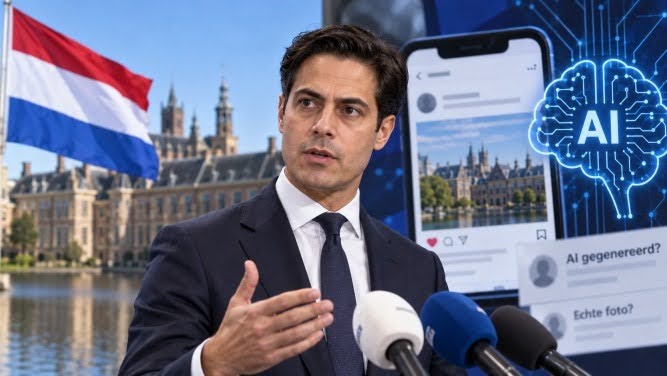
In the Netherlands, Prime Minister Rob Jetten and the D66 party have faced scrutiny for their use of artificial intelligence in crafting social media content, sparking a debate over the authenticity and trustworthiness of their communications. An examination of 1,812 posts dating back to 2021 from the official accounts of Jetten and D66 on platforms such as X, Instagram, Facebook, and LinkedIn revealed that at least 232 posts were AI-generated. This included 68 posts from Jetten’s personal accounts and 164 from the party’s accounts.
The reliance on AI for generating social media content saw a notable uptick following the collapse of the Schoof I Cabinet in June 2025. From that juncture, approximately 30% of posts associated with Jetten and D66 were identified as products of AI technology. AI was also employed in part for Jetten’s book “Hoe het wél kan” and to script lines in three campaign videos for the D66 party.
Particularly concerning to observers is that some AI-generated posts touched on delicate topics such as the ongoing conflict in Ukraine, the remembrance of the MH17 tragedy, and the Dutch government’s apology to the Moluccan community. While D66 has acknowledged utilizing AI in their communications, they assert that all material undergoes review and refinement by staff members. Furthermore, the party insists that the content on Jetten’s personal accounts is derived from his own input and receives his final approval or edits.
The implications of AI-generated content have sparked a dialogue about its impact on political transparency and the authenticity of politicians’ communications. Claes de Vreese, a professor at the University of Amsterdam, expressed concerns that AI-generated language might blur the lines between genuine political views and computer-generated messaging, potentially diminishing Jetten’s credibility. This situation raises broader questions about the role of AI in political discourse, especially when the public expects social media accounts of politicians to genuinely reflect their personal perspectives and language.