
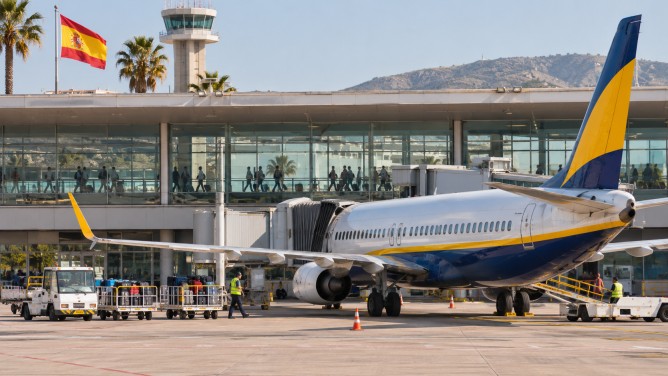
As the Middle East conflict drives up fuel prices, European low-cost airline Ryanair is considering a series of cost-cutting measures. These include potential pay freezes, reductions in cabin crew numbers, and an increased reliance on artificial intelligence (AI) to manage soaring operating costs. Chief Executive Michael O’Leary has highlighted that the airline anticipates its jet fuel bill to rise by approximately €2 billion by March 2028, with fuel prices remaining elevated unless the conflict is resolved swiftly.
In response to these financial pressures, Ryanair is reviewing various aspects of its operations, including labor agreements, airport charges, and staffing levels. The airline is contemplating temporary pay freezes for some employees whose agreements are up for renegotiation from March. However, this move could lead to disputes with trade unions, such as Unite, which has a multi-year pay agreement in place until 2027 and expects Ryanair to honor it regardless of the airline’s financial situation.
Ryanair is also slowing down the recruitment of new pilots and cabin crew, while leveraging AI technology to enhance operational efficiency. AI systems have already improved aircraft capacity by 4% through better flight scheduling and utilization. Despite these efforts, Ryanair foresees a significant rise in European short-haul airfares next year as existing fuel-hedging agreements expire and fuel costs remain high.
The airline has hedged 80% of its fuel needs at $67 per barrel until the end of March, but only 25% of its fuel requirements are secured for the following 12 months at roughly $95 per barrel. This hedging strategy reflects Ryanair’s attempt to manage fuel cost volatility amid uncertain geopolitical circumstances.
Despite these challenges, Ryanair reported a post-tax profit of €1.61 billion for the quarter ending in September, a 6% decrease from the same period last year, while passenger numbers rose by 5% to 64.5 million. Looking ahead, the airline plans to introduce Boeing 737 MAX 10 aircraft starting in January. These new planes are expected to provide about 20% more seating capacity and consume approximately 20% less fuel than the current fleet, potentially helping to mitigate rising operating costs.