
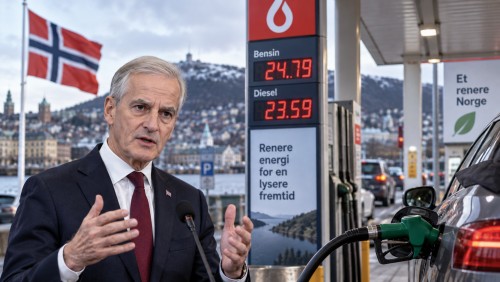
As global oil prices climb, Norway faces renewed political tensions over fuel tax policies that could alleviate the financial strain on households and industries. The debate has intensified since the Norwegian government ended temporary fuel tax relief on September 1, leading to increased pressure on Prime Minister Jonas Gahr Støre’s administration to reconsider its stance.
The Center Party has announced plans to propose the reintroduction of the fuel tax cut when the Norwegian Parliament reconvenes in October. If approved, the measure would reduce fuel prices by approximately NOK 4.50 per litre. This proposal has garnered support from the Progress Party and the Christian Democrats, amplifying calls for immediate governmental action.
Sylvi Listhaug, leader of the Progress Party, has emphasized the urgency of addressing high fuel costs, which are impacting businesses heavily reliant on petrol and diesel, such as those in the transport and construction sectors. The party is also urging the Conservative Party to back the initiative, pushing for Parliament to expedite discussions on tax relief.
Within the Conservative Party itself, more than 60 local chapters are reportedly advocating for reduced fuel taxes. The demand is particularly strong in regions with limited public transportation options, where residents predominantly depend on personal vehicles for their daily commutes.
Despite Norway’s significant role as a major oil producer and its increasing adoption of electric vehicles, many industries and households continue to rely on traditional fuel sources. The high costs are even prompting some Norwegian motorists to seek cheaper alternatives across the border in Sweden, highlighting the broader economic implications of the current tax policy.