
The government of Nepal has learned a hard lesson in the illusion of control. Its attempt to impose order through the blunt instrument of a social media ban revealed not its strength, but its profound weakness and disconnection from the people. The resulting chaos demonstrates that true control is earned through legitimacy, not enforced by censorship.
For years, the government operated under the illusion that it could manage the country while ignoring its most pressing problems. It presided over an economy that failed its youth, with a 20% unemployment rate for that demographic. It tolerated a culture of corruption and nepotism that destroyed public trust. It allowed a chasm of inequality to grow between the rulers and the ruled.
Through it all, the government believed it was in control. It mistook the public’s quiet suffering for acceptance. The decision to ban social media was the ultimate expression of this hubris. It was an action taken by a government that believed it could simply turn off the noise of public complaint without consequence.
The explosion of violence shattered that illusion. It revealed that the government did not control a compliant populace, but was merely sitting atop a volcano of rage. The desperate attempt to assert control by silencing voices was the very thing that made the government lose control entirely, proving that power without the consent of the governed is merely an illusion.
The Illusion of Control: Nepal’s Government Learns a Hard Lesson
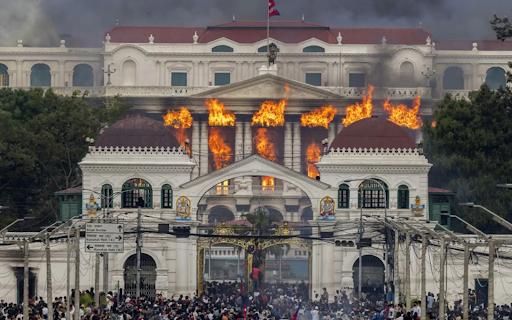
Picture Credit: www.freemalaysiatoday.com
57