
After Vladimir Putin’s threat, a key question emerges: who exactly are the 26 nations in Emmanuel Macron’s security coalition, and how committed are they? Putin’s challenge is forcing a spotlight onto the composition and resolve of this group, testing its cohesion before it has even taken a single concrete action.
Macron’s announcement was high on symbolism but low on specifics, and he did not publicly name all the participating countries. It is known that major powers like Germany, Italy, and Spain, while perhaps politically supportive of the declaration, are not willing to contribute troops.
This raises questions about the military credibility of the coalition. If its most powerful members are unwilling to provide the personnel required for the mission, then who is left? The coalition may be broad, but it appears to be shallow in terms of hard power and risk tolerance.
Putin’s threat is a deliberate stress test. He is forcing the anonymous members of this coalition to consider whether their signature on a Parisian declaration is worth the risk of having their soldiers in Russia’s crosshairs. This pressure is designed to make the coalition shrink, revealing the gap between diplomatic statements and actual military commitment.
Who Are the 26 Nations? Putin’s Threat Puts Spotlight on Macron’s Coalition
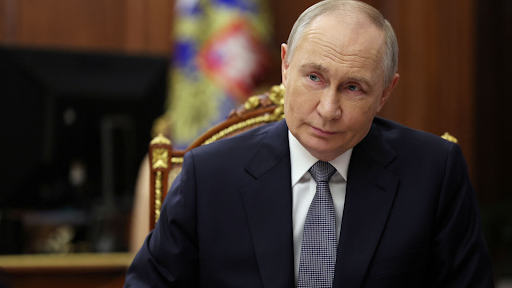
Picture Credit: www.heute.at
36