
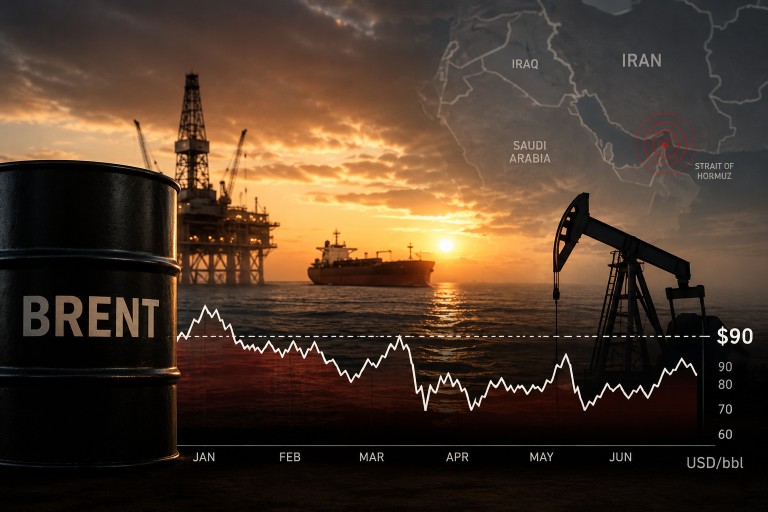
Despite achieving its largest weekly increase since April, Brent crude oil may need a sustained disruption in the Strait of Hormuz or clearer evidence of tightening global supplies to push past $90 per barrel. On Friday, the global benchmark was trading close to $85 and was poised for an 11% gain for the week, while the US benchmark, West Texas Intermediate, was nearing $80. Oil prices have been on the rise following renewed military tensions between the United States and Iran that have affected Middle Eastern supply routes and slowed tanker traffic through the Strait of Hormuz, which is responsible for about 20% of the world’s oil flows.
Yet, even as the conflict has grown broader and tanker movements through Hormuz have decreased considerably, Brent has faced challenges in surpassing this week’s high of $87.55 per barrel. Analysts suggest that the market still holds out hope for diplomatic resolutions, which has tempered further price increases. Market observers are particularly attentive to whether there will be a significant decline in global inventories and if the Hormuz disruption extends over a longer period.
Despite the intensifying military skirmishes, oil markets have shown relative stability. Brent crude has been trading within a tight range in recent days, reflecting investor expectations that the tensions might de-escalate rather than escalate. The Strait of Hormuz remains a critical focus for energy markets, with tanker traffic slowing and exporters increasingly seeking alternative routes to lessen their reliance on this strategic passage.
The ramifications are extending beyond crude oil. In the United States, refining margins have increased due to tightened diesel and gasoline supplies, and European fuel markets are also beginning to exhibit strain. The global energy supply pressure is further compounded by a reduction in Russian fuel exports. Market participants are now concentrating on two primary factors: whether a drop in oil inventories will signal a supply shortage and if diplomatic initiatives fail, leading to a more extended disruption in the Gulf region.
Until these scenarios unfold, analysts anticipate that Brent crude will likely stay below the $90-per-barrel threshold, despite the ongoing geopolitical risks. The situation remains fluid, and the market’s response will hinge on the evolving dynamics of military and diplomatic developments in the Middle East. Meanwhile, the energy sector continues to navigate the challenges posed by the current geopolitical climate, with a watchful eye on any potential shifts that could further impact oil prices.