
The current Japan-China crisis affects infrastructure investment decisions in both countries and throughout the region as businesses and governments reassess assumptions about bilateral relationship stability that underlie long-term capital allocation decisions. Prime Minister Sanae Takaichi’s Taiwan statements and comprehensive Chinese economic pressure responses create uncertainty about future economic relationship trajectories that must be incorporated into infrastructure planning requiring decades-long timeframes and involving irreversible capital commitments.
Japanese infrastructure investments designed to serve Chinese tourism or facilitate bilateral trade become questionable when diplomatic tensions threaten to disrupt economic relationships repeatedly or permanently. Tourism facilities, transportation connections, and various other infrastructure projects justified by expectations of growing Chinese visitor flows—which reached over 8 million representing 23% of all arrivals in first ten months of this year—face uncertain returns if bilateral tensions create recurring disruptions. The projected $11.5 billion in tourism losses from current crisis illustrate infrastructure utilization risks.
Similarly, Chinese infrastructure investments in Japanese markets or aimed at Japanese tourists face uncertain returns when bilateral tensions threaten economic relationships. Entertainment facilities, business operations, and various other capital-intensive projects require stable bilateral relationships for decades-long amortization periods, with political volatility creating risks that infrastructure investments may not generate expected returns over their economic lifetimes.
The infrastructure dimension extends to regional connectivity projects where Japanese and Chinese participation or coordination are necessary for project viability. Transportation corridors, digital infrastructure, energy networks, and various other regional projects depend on sufficient bilateral cooperation to justify the substantial capital commitments required. When bilateral relationship stability appears uncertain, the business case for these infrastructure investments weakens regardless of their potential economic benefits assuming stable cooperation.
The result may be systematic underinvestment in infrastructure that would facilitate bilateral economic integration and regional connectivity. While such infrastructure could generate substantial economic benefits under stable cooperative relationships, the political risk demonstrated by current crisis creates uncertainty that may prevent optimal infrastructure development. The lost economic benefits from foregone infrastructure investments represent another dimension where bilateral tensions impose costs beyond immediate disruptions.
The infrastructure investment impact creates particularly long-lasting effects because capital allocation decisions made during crisis periods affect economic geography and connectivity patterns for decades into the future. If current crisis causes Japanese and Chinese governments and businesses to reduce infrastructure investments in bilateral connectivity, the result may be lasting constraint on bilateral economic relationship depth regardless of whether diplomatic relations eventually stabilize, as the physical infrastructure enabling dense economic integration requires long lead times to develop and represents irreversible commitments difficult to compensate for later.
Professor Liu Jiangyong indicates countermeasures will be rolled out gradually while Sheila A. Smith notes domestic political constraints make compromise difficult, suggesting prolonged bilateral uncertainty that affects infrastructure investment decisions over extended periods. Small businesses like Rie Takeda’s tearoom facing immediate cancellations represent operating-level impacts, while reduced infrastructure investment represents strategic-level consequences where bilateral crisis affects long-term capital allocation and regional economic geography in ways that persist beyond immediate diplomatic tensions and constrain future bilateral economic potential regardless of eventual relationship normalization.
Infrastructure Investment Decisions Affected by Bilateral Uncertainty
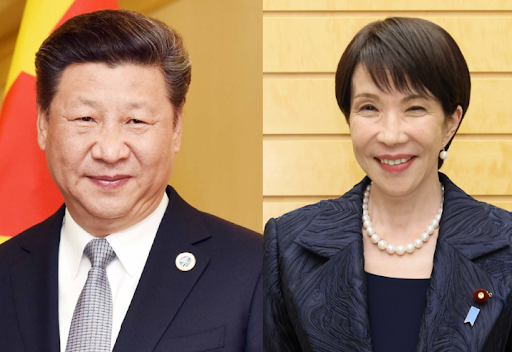
Picture credit: www.commons.wikimedia.org
34