
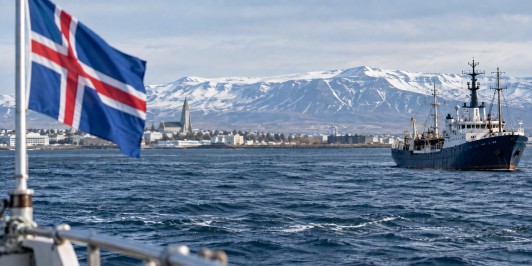
The Icelandic government is moving towards enacting a permanent ban on commercial whaling, a decision that, if realized, would leave Japan and Norway as the solitary countries persisting in this controversial practice. The legislative proposal is anticipated to be presented to parliament by February, aiming to cement a long-debated position against whaling in the country. This legislative effort has gained momentum with strong backing from animal welfare and conservation organizations, which have long opposed whaling due to ethical and environmental concerns.
Iceland’s whaling activities have largely targeted fin whales, which are listed as a vulnerable species. During the current hunting season, spanning from June to September, the whaling industry has captured numerous fin whales under a quota sanctioned by the government. The proposed ban has been warmly received by activists and organizations advocating for animal rights, who argue that the cessation of whaling aligns with broader conservation goals and ethical considerations.
Commercial whaling in Iceland resumed in 2006, defying an international moratorium established in 1986 aimed at safeguarding whale populations worldwide. Norway, on the other hand, restarted its commercial whaling operations in 1993. Meanwhile, Japan opted to withdraw from the International Whaling Commission in 2019, subsequently resuming its commercial whaling activities within its territorial waters and exclusive economic zone. Should Iceland’s legislative proposal succeed, Norway and Japan would stand alone in continuing commercial whaling practices.
It is important to note that the international moratorium does not extend to indigenous communities in certain areas, such as parts of Greenland and Alaska, where whaling is allowed for nutritional, cultural, and traditional purposes. This distinction underscores the complex dynamics of whaling policies, balancing cultural heritage with conservation efforts. As Iceland moves closer to potentially ending its commercial whaling activities, the global discourse on whaling practices and their implications for marine biodiversity and cultural traditions continues to evolve.