
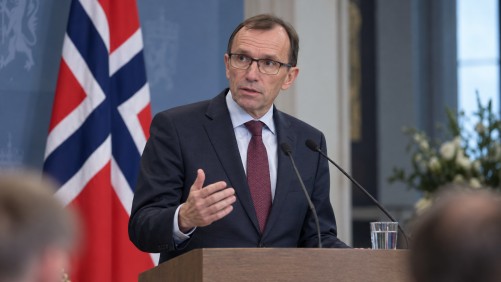
Norway’s Foreign Minister, Espen Barth Eide, has underscored the independence of the Nobel Peace Prize selection process following criticism from former U.S. President Donald Trump regarding the recent award choice. Trump voiced his discontent at a Republican campaign event in New York, where he argued that the United States should have been recognized for his administration’s diplomatic efforts, rather than awarding the prize to South African jurist Navi Pillay.
In response to Trump’s comments, Eide emphasized that the Nobel Peace Prize is determined by an independent committee, not the Norwegian government. He defended the selection of Pillay, highlighting her significant contributions to promoting international law and human rights. Pillay, who has served as the United Nations High Commissioner for Human Rights, has been recognized for her work in advancing accountability under international law, including her leadership of a UN commission that accused Israel of genocide in Gaza, a finding that Israel disputes.
Trump’s critique extends beyond the committee’s decision, suggesting that the outcome tarnishes Norway’s reputation. He also accused Norway of unfair treatment towards the United States by not awarding him the prize, suggesting that his diplomatic efforts during his presidency should have been acknowledged. Trump’s remarks included warnings that the United States would remember this perceived slight.
The Nobel Peace Prize is awarded by a five-member committee chosen through Norway’s parliamentary process, reflecting the political composition of the Norwegian Parliament. However, the committee operates independently when selecting laureates, as stipulated by the will of Alfred Nobel, the Swedish inventor who established the prizes.
This controversy has brought renewed attention to the distinction between Norway’s government and the committee responsible for the Nobel Peace Prize. Norwegian officials have consistently maintained that the government does not influence the committee’s decisions. The situation highlights ongoing debates over the interpretation of international diplomacy, human rights, and the autonomy of independent institutions in awarding the prestigious prize.